
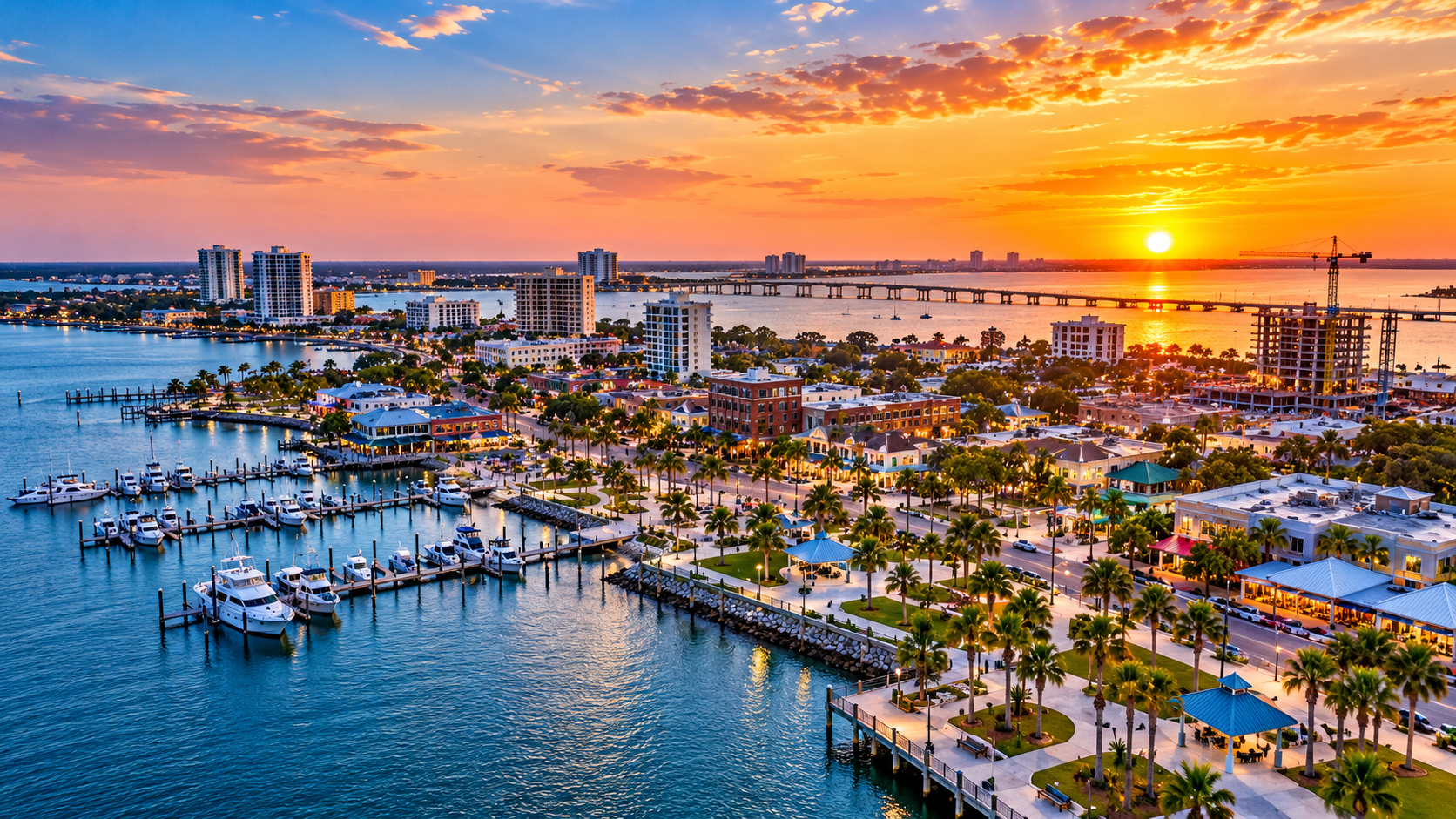
Today, Panama City and Panama City Beach are known for emerald Gulf waters, white-sand beaches, fishing, boating, seafood and the relaxed coastal lifestyle that attracts visitors and new residents from across the country.
But long before the high-rise condos, beach resorts and busy restaurants, this part of Northwest Florida looked very different.
The story of Panama City is tied to St. Andrews Bay, fishing, shipping, railroads and several small communities that eventually became the city we know today. Across the bay, Panama City Beach developed its own identity as a classic Florida vacation destination.
Here's a look back at how it all began.
Panama City didn't begin as one large city.
The area around St. Andrews Bay developed as a collection of smaller communities, including St. Andrews, Millville, Harrison and Floriopolis. Over time, transportation, commerce and development brought those communities closer together.
Water played an enormous role from the beginning.
St. Andrews Bay provided access for fishing and maritime commerce, and many of the characteristics associated with Panama City today—from marinas and seafood to commercial fishing and shipbuilding—have deep roots in that relationship with the water.
One of the most interesting pieces of local history is the origin of the name Panama City.
Local leaders, including developer George M. West and railroad founder A.B. Steele, chose the name while the Panama Canal was being built.
The idea was strategic: Panama City was positioned as a developed U.S. port relatively close to the canal, and local leaders hoped the name would help encourage real estate development and international trade.
So the name wasn't simply chosen because it sounded tropical.
It was connected to a much larger vision for the city's economic future.
More than a century later, the Port of Panama City remains part of the area's commercial identity.
If you want to experience Panama City's history today, Historic St. Andrews is one of the best places to start.
The waterfront neighborhood still has the feeling of the fishing community that helped shape the area. Beck Avenue is now lined with restaurants, shops and other local businesses, while the marina keeps the neighborhood closely connected to St. Andrews Bay.
There's history hidden throughout the neighborhood.
At Oaks by the Bay Park, for example, stands an enormous oak known as Old Sentry, believed to be more than 250 years old. The park also contains the Salt Kettle, a Civil War-era artifact associated with the production of salt from seawater.
Historic St. Andrews is a good example of what makes Panama City interesting today: you can have dinner overlooking the water and be just steps away from reminders of a much earlier version of the city.
Historic Downtown Panama City also contains pieces of local—and even national—history.
One notable landmark is the Bay County Courthouse, associated with Gideon v. Wainwright, the landmark U.S. Supreme Court case that established the right to appointed counsel for defendants who cannot afford an attorney in state felony criminal cases.
The downtown historical route also includes Old City Hall, now home to the Panama City Center for the Arts, and the Massalina Bayou Bridge, which Destination Panama City describes as one of Northwest Florida's remaining working drawbridges.
It's easy to drive through downtown without realizing how many stories are sitting behind the buildings and streets around you.
Across the bay, another community was beginning to develop.
Panama City Beach is considerably younger than many people realize. The beach area's development accelerated after the St. Andrews Bay Bridge opened in 1929, making the beachfront much more accessible from the mainland.
In its earlier years, the beach looked nothing like today's skyline.
Instead of large condominium towers and resorts, visitors encountered cottages, small motels and casual beachfront establishments.
Gideon Thomas built the Panama City Hotel in 1935 and promoted tourism at a time when the beach was still developing as a destination.
Panama City Beach would eventually grow from a relatively quiet coastal getaway into one of Northwest Florida's best-known vacation destinations.
By the 1950s and 1960s, Panama City Beach was developing the nostalgic beach-town personality that many longtime visitors still remember.
One famous gathering place was The Hangout, a simple wooden dance hall and concession area that became part of the social scene for young beachgoers during that era.
Other attractions followed.
Goofy Golf, which opened in 1959, became one of the area's recognizable roadside attractions. Thomas' Donuts followed in 1971 and became another piece of the classic PCB experience.
There was also the Top O' the Strip observation tower, a roughly 200-foot structure that gave visitors sweeping views of the coastline until damage from Hurricane Opal eventually led to its removal.
These were the days of family-owned motels, miniature golf, roadside attractions and simple days spent by the Gulf.
As more people discovered the area's coastline, Panama City Beach continued to evolve.
Small motels and cottages gradually gave way to larger resorts and condominium developments. Tourism became increasingly important to Bay County, and the skyline changed along with it.
Yet one thing hasn't changed much at all:
the beach itself.
Panama City Beach still has approximately 27 miles of coastline, famous for its white sand and emerald-colored water.
Interestingly, that white sand has a history much older than Panama City Beach. The area's distinctive sand comes largely from quartz crystals that traveled from the Appalachian Mountains, gradually becoming ground, smoothed and bleached before eventually being deposited along the Gulf Coast.
Long before anyone built a motel, marina or condominium here, nature was already creating the feature that would eventually make the area famous.
Even one of today's most popular outdoor destinations has an interesting past.
Before becoming a Florida state park, land within today's St. Andrews State Park was used as a military reservation during World War II. The park opened in 1951.
Today, visitors know it for beaches, dunes, fishing, camping, hiking and access to the waters around St. Andrews Bay and the Gulf.
It's another example of how layers of local history remain hidden beneath places we now think of primarily as recreation destinations.
When you look at Panama City's history as a whole, one theme keeps appearing:
the water.
Fishing helped sustain early communities.
The bay supported commerce and industry.
The port helped shape the city's ambitions.
The Gulf turned Panama City Beach into a tourism destination.
And today, boating, fishing, beaches, seafood restaurants, marinas and waterfront neighborhoods remain central to the area's identity.
Buildings change. Roads change. Neighborhoods grow.
But St. Andrews Bay and the Gulf continue to connect Panama City's past with its present.
You don't have to visit a museum all day to experience local history.
Take a walk through Historic St. Andrews.
Visit Oaks by the Bay Park.
Explore Downtown Panama City.
Drive along the bay.
Stop at one of the area's longtime local businesses.
Or spend an afternoon at St. Andrews State Park and remember that people have been drawn to these waters for generations.
Panama City and Panama City Beach may look very different today than they did decades ago, but traces of the old fishing villages and classic Florida beach town are still here.
You just have to know where to look.
At Panama City Storage, we're proud to be a local business serving a community with such a unique past—and an exciting future.
Panama City Storage
1920 Sherman Ave
Panama City, FL
Call or text: 850-771-7676
Secure. Simple. Local.